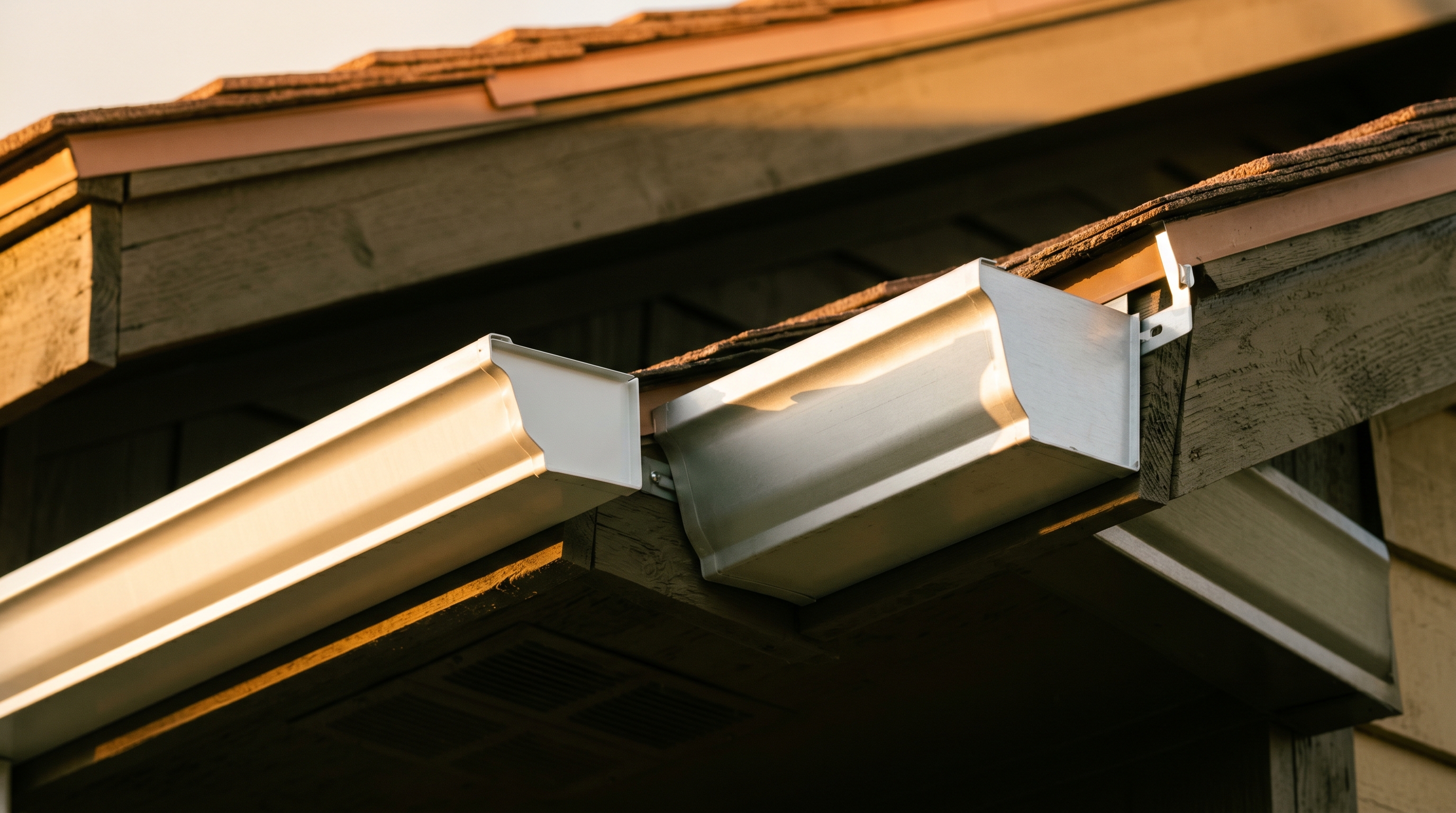
Most homeowners think of gutters as the system. They are not — the gutter is the catch basin, and the downspout is the delivery pipe. A perfectly-sized gutter feeding into a too-small downspout backs up and overflows in any meaningful Texas rain. The downspout side is where most installs cut corners, and where most drainage problems start.
Why downspout sizing matters
A standard 2×3 downspout moves about 600 gallons per hour. A 3×4 downspout moves roughly 1,400 gallons per hour — more than twice the throughput. On a 2,400 sq ft Texas roof during a 2-inch hour, the gutter sees about 1,000 gallons of water. With 2×3 downspouts, you are already overflowing.
Industry default in Texas new construction has been 2×3 for decades because it is cheaper. We refuse to install gutters with 2×3 spouts. The labor difference between sizes is zero. The throughput difference is everything.
Extensions and splash blocks
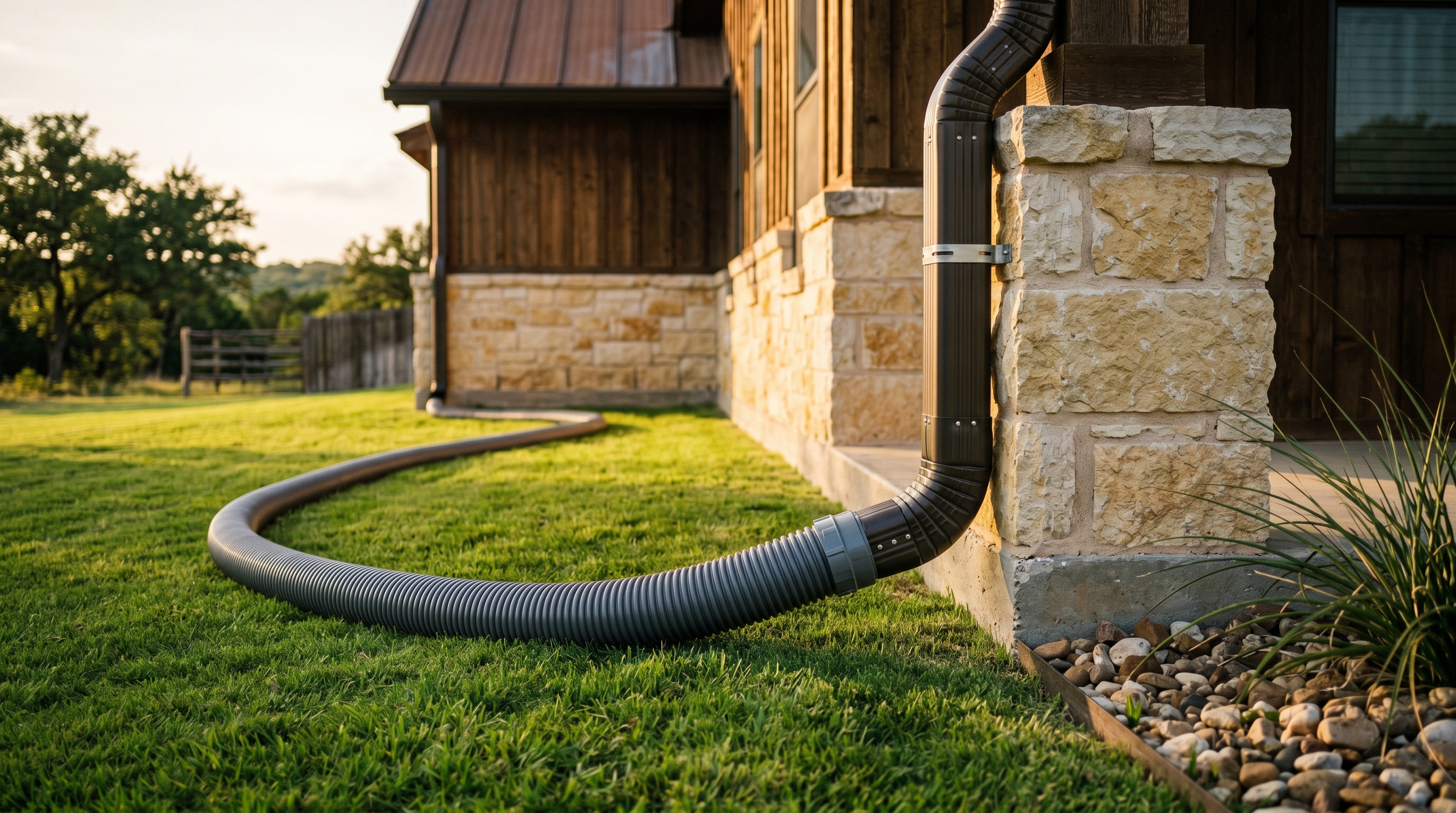
A downspout that ends at the foundation is worse than no downspout at all — it concentrates the entire roof's runoff into one spot against your slab. Three options to route water away:
- Splash blocks — concrete or molded plastic ramps that direct water 18 to 24 inches out. Cheapest, mostly effective.
- Flexible extensions — black corrugated pipe that runs water 4 to 8 feet from the foundation. Easy DIY.
- Buried tie-ins to French drains or surface daylight points — the premium option for problem yards.
How many downspouts you actually need
Rule of thumb: one downspout per 30 to 40 linear feet of gutter run. On a typical Texas suburban home with 180 linear feet of gutters, that is 5 to 6 downspouts — most builder installs come with 3. Adding the missing ones during a gutter replacement costs about $80 to $150 per spout, and it is the single highest-impact upgrade you can make.
Free estimates across North Texas. Same-day inspections during storm season.