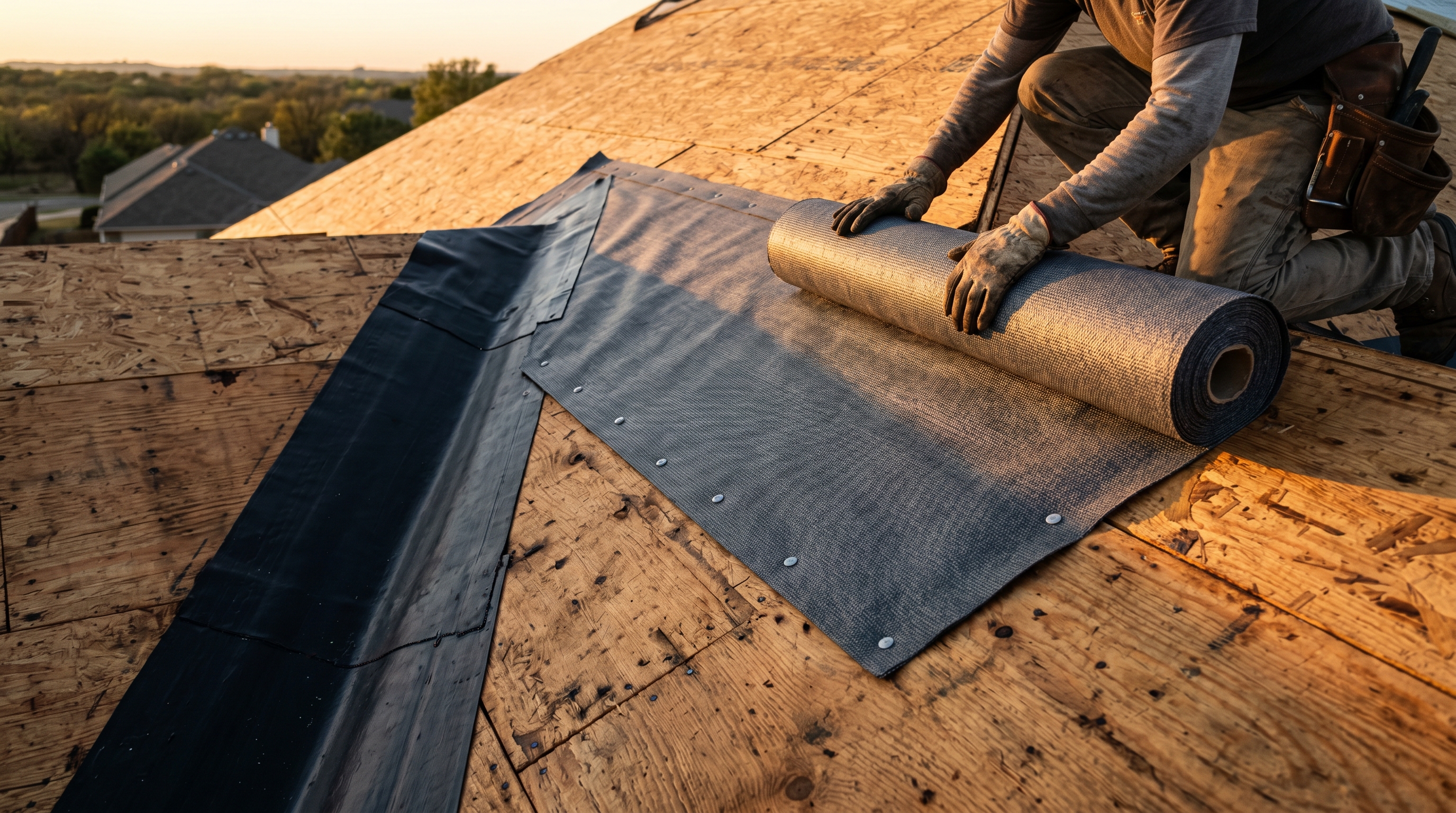
Ask a homeowner what is on their roof and they will name the shingle. Ask a roofer the same question and the answer starts with the underlayment. The shingle is the wear layer. The underlayment is the actual water barrier — and when a roof leaks, the underlayment is usually the part that failed first.
The three layers under your shingles
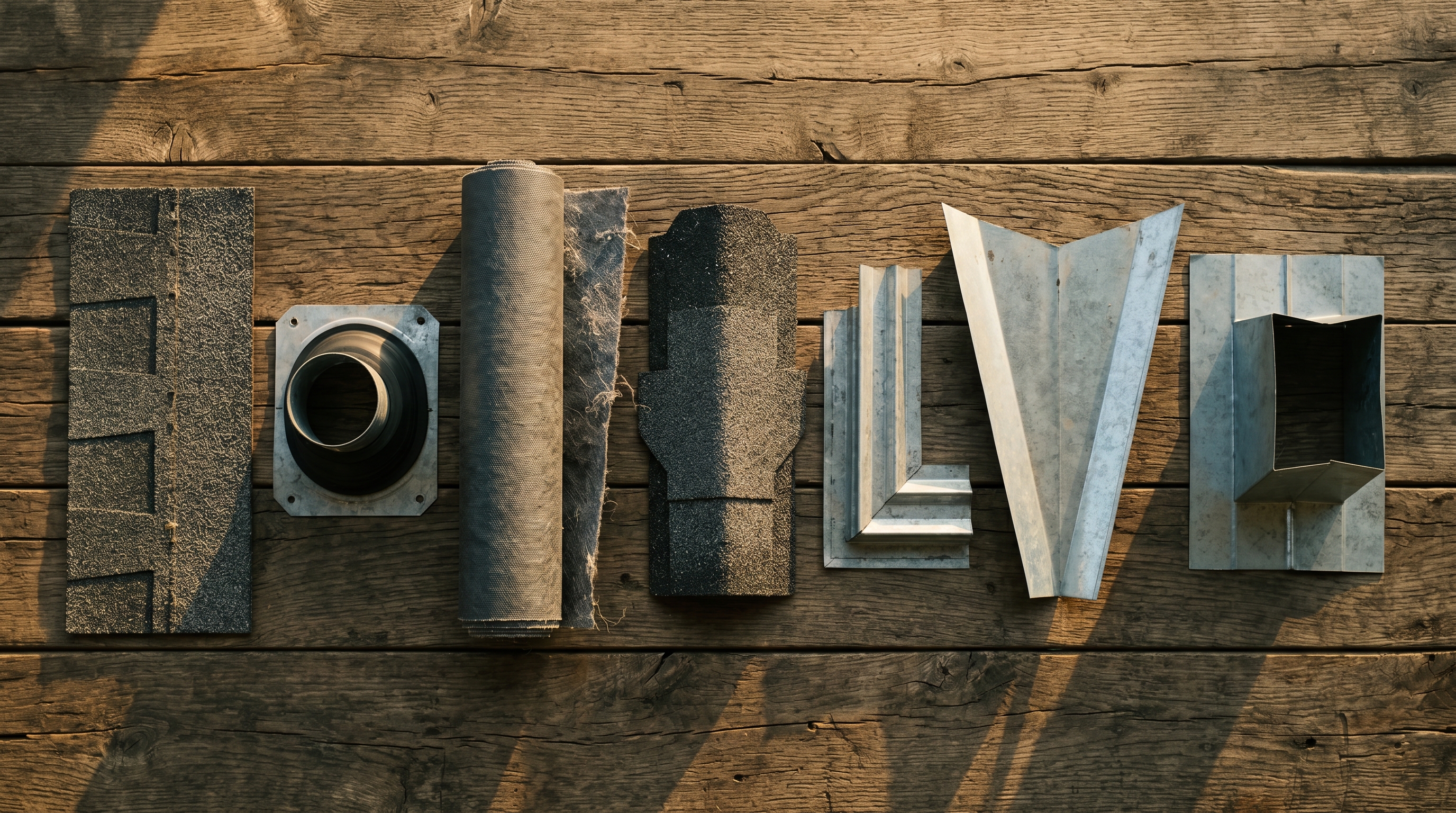
- 1Decking — usually 5/8" or 1/2" OSB or plywood. The structural substrate.
- 2Underlayment — a continuous water-resistant membrane laid over the decking before shingles go down.
- 3Ice & water shield — a self-sealing rubberized membrane used in valleys, around penetrations, and along eaves.
Felt vs. synthetic — and why this matters
Traditional underlayment is asphalt-saturated felt paper, usually 15-pound or 30-pound weight. It works, but it tears in wind, wrinkles when wet, and degrades after 10 to 15 years. Most quality reroofs today use synthetic underlayment instead — a woven polypropylene or polyester sheet that is:
- 5 to 8 times stronger than 30-pound felt
- Lighter and easier to roll out flat
- UV-stable for up to 6 months exposed (felt fails in 3 to 4 weeks of sun)
- Slip-resistant when wet — installers actually use it as a working surface
GAF Tiger Paw, Owens Corning ProArmor, and Atlas Summit are the three we use most. Per-square cost is about $4 to $7 more than felt. On a 28-square roof, you are paying $110 to $200 more for a barrier that outlives the shingles above it.
Why ice & water shield is required at valleys
Ice & water shield is a separate, much heavier rubberized membrane with an adhesive backing. It self-seals around nail holes — which is the entire point. In a roof valley, where two slopes meet and water concentrates, a regular underlayment will eventually leak at the nail penetrations. Ice & water shield seals around every nail and stops that leak before it starts.
Texas building code does not require ice & water shield everywhere (we do not get the ice dams that drove the original code). But on any quality reroof we do, we install it in every valley, around every plumbing and vent penetration, and along the eaves on the bottom three feet of every slope.
How to read your estimate
A quality reroof estimate names the underlayment and the ice-and-water shield brands by name. If yours says "synthetic underlayment" with no manufacturer, ask. If it just says "felt paper," you are looking at a budget job — fine for a rental, not fine for a forever home.
Free estimates across North Texas. Same-day inspections during storm season.