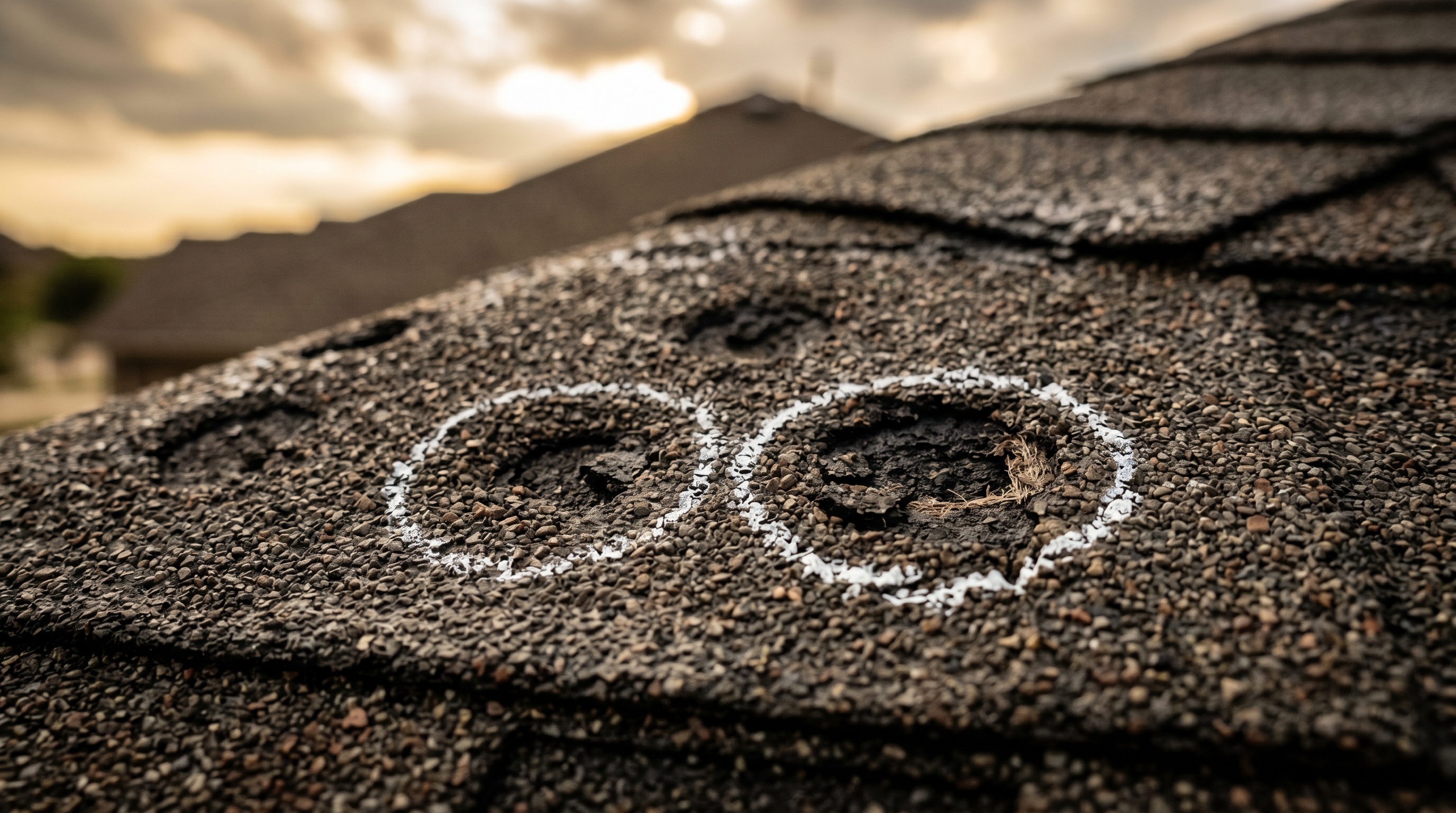

When your carrier approves a hail claim, two acronyms show up on every page: ACV and RCV. They look like jargon and they cost you money if you do not know which one your policy pays. Here is the short version.
ACV — Actual Cash Value
ACV is what your damaged roof is worth right now — replacement cost minus depreciation. A 15-year-old roof that would cost $14,000 to replace today might have an ACV of $5,000 because depreciation has eaten 65 percent of its value.
On an ACV-only policy, that $5,000 is all the carrier pays you. You cover the remaining $9,000 yourself. ACV-only policies are cheaper monthly but absolutely brutal in the aftermath of a serious storm. Most older policies in Texas are ACV — check yours before you assume otherwise.
RCV — Replacement Cost Value
RCV is what it actually costs to replace the roof with materials of "like kind and quality" today. On an RCV policy, the carrier pays the full replacement cost minus your deductible.
The catch: RCV is usually paid in two checks.
- 1Check 1 — the ACV check (typically 50–70 percent of the total) — issued at claim approval, used to start the work.
- 2Check 2 — the depreciation recovery check (the difference) — released once the work is completed and the final invoice is submitted.
You only get the second check if the work is actually done. That is the whole point of the structure — it prevents homeowners from pocketing the claim money and never fixing the roof.
The depreciation check is real money — claim it
On a typical $18,000 RCV claim with $5,000 of depreciation, that second check is $5,000. Surprisingly often, homeowners forget to submit the final invoice and forfeit it. Your roofer should be doing this for you. We do.
Free estimates across North Texas. Same-day inspections during storm season.